
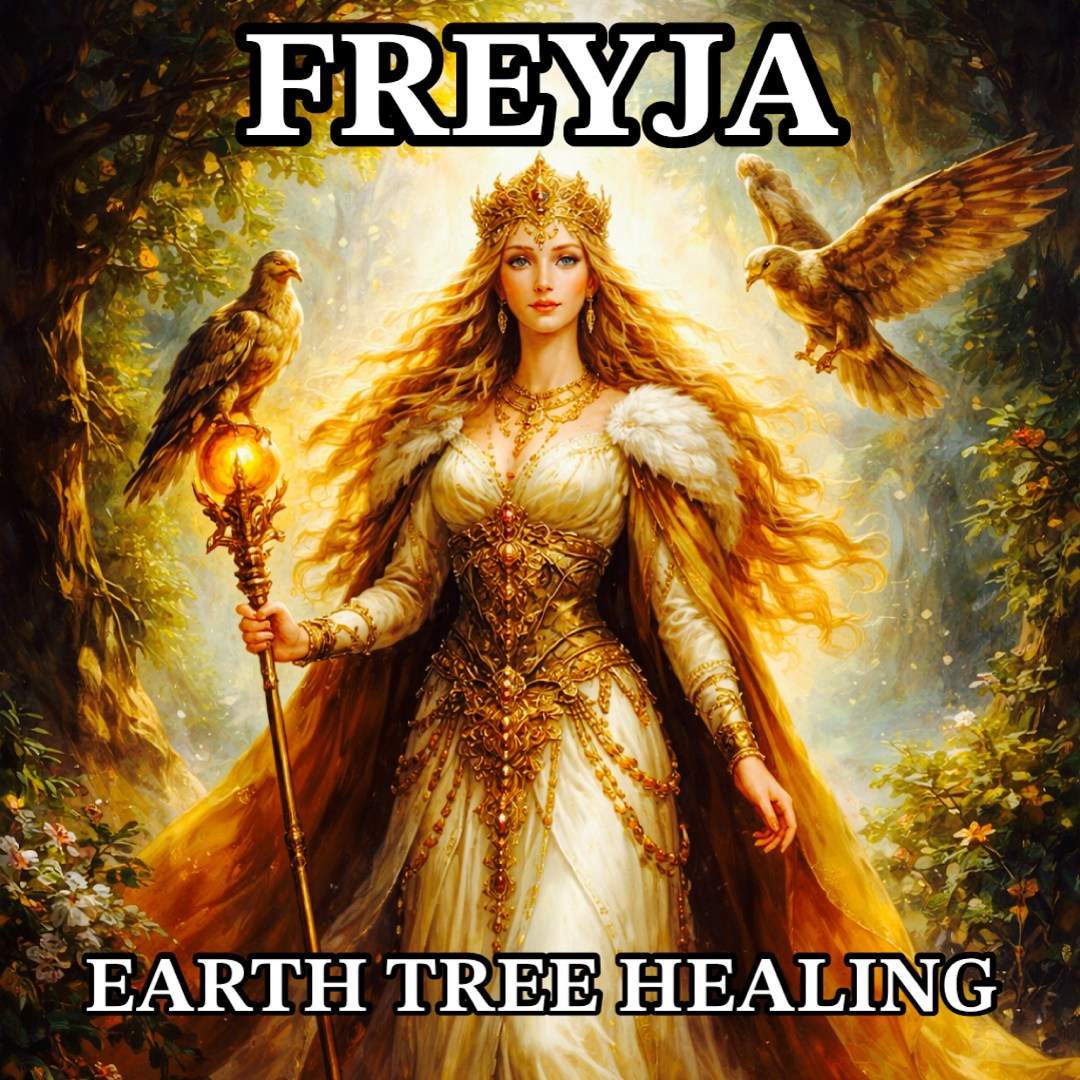
New Release
“Freyja” by Earth Tree Healing is out now, and it’s absolutely breathtaking.
This single feels like stepping into another realm—gentle piano melodies intertwined with delicate harp and strings create a soundscape that’s both calming and deeply moving. It carries a quiet by rhymical, almost sacred energy, as if it’s telling an ancient story without words.
Perfect for moments of reflection, healing, or simply slowing down and being present.
If you’re looking for something beautiful to lose yourself in today, this is it.
Freyja. Goddess of Love. War. Magic. Freyja isn’t just beauty—she’s power. A fierce Norse goddess who chooses half of the fallen warriors, masters ancient magic, and walks between love and battle like it’s nothing. She reminds us: you can be soft and unstoppable. Channel your inner goddess. Own your desire. Protect your energy.
Music Links https://linktr.ee/earthtreehealing
Freyja and Ragnarök: Love, Loss, and Power in Norse Mythology
In the vast and often brutal world of Norse mythology, few figures shine with as much complexity and intrigue as Freyja—the goddess of love, beauty, magic, and war. While many remember Ragnarök as a tale of destruction and the fall of the gods, Freyja’s presence within this mythic framework offers a deeper, more emotional lens through which to understand both the end of the world and the values of the Norse cosmos.
Freyja is not easily defined. She is at once a symbol of desire and fertility, and a formidable practitioner of seiðr, a powerful and mysterious form of magic associated with fate and transformation. She rides a chariot pulled by cats, weeps tears of gold, and possesses the coveted necklace Brísingamen—an object as radiant as her reputation. Yet beneath these poetic images lies a goddess deeply tied to both life and death.
Unlike many deities associated strictly with war, Freyja shares dominion over the fallen. While Odin gathers half of the slain warriors in Valhalla, Freyja welcomes the other half into her hall, Fólkvangr. This dual role places her at the very heart of conflict and consequence, making her an essential figure in the events leading up to Ragnarök.
Though the surviving myths do not provide a detailed account of Freyja’s fate during Ragnarök, her significance makes her impossible to ignore. As a goddess of love and fertility, she represents everything that stands to be lost in the great destruction—the beauty of the world, the bonds between beings, and the fragile continuity of life. Yet as a goddess of magic and war, she also embodies resilience, knowledge, and the power to endure.
Ragnarök itself is a story driven not only by violence, but by inevitability. The gods march toward their doom, fully aware of what awaits them. In this context, Freyja’s mastery of seiðr becomes especially poignant. Magic in Norse mythology is often linked to foresight and fate, suggesting that Freyja, like Odin, may have glimpsed the coming end. If so, her role becomes even more profound—not just as a participant in the mythic world, but as a witness to its unraveling.
What makes Freyja particularly compelling is her emotional depth. She is not a distant or purely symbolic figure; she feels, desires, mourns, and seeks. Her tears of gold are more than a poetic flourish—they reflect a world in which even gods experience loss. In the shadow of Ragnarök, this emotional dimension reminds us that the end of the world is not just a cosmic event, but a deeply personal one.
And yet, as with all things in Norse mythology, the story does not end in darkness alone.
Ragnarök gives way to renewal. The world rises again, green and fertile, echoing Freyja’s own domain over life and growth. Whether she survives or not, her essence—love, beauty, and the forces that sustain life—remains woven into the fabric of the reborn world.
Freyja, then, is more than a goddess caught in the storm of Ragnarök. She is a symbol of what makes the world worth saving, and what inevitably returns after even the greatest destruction.
In a myth defined by endings, Freyja reminds us of beginnings.
 Earth Tree Healing