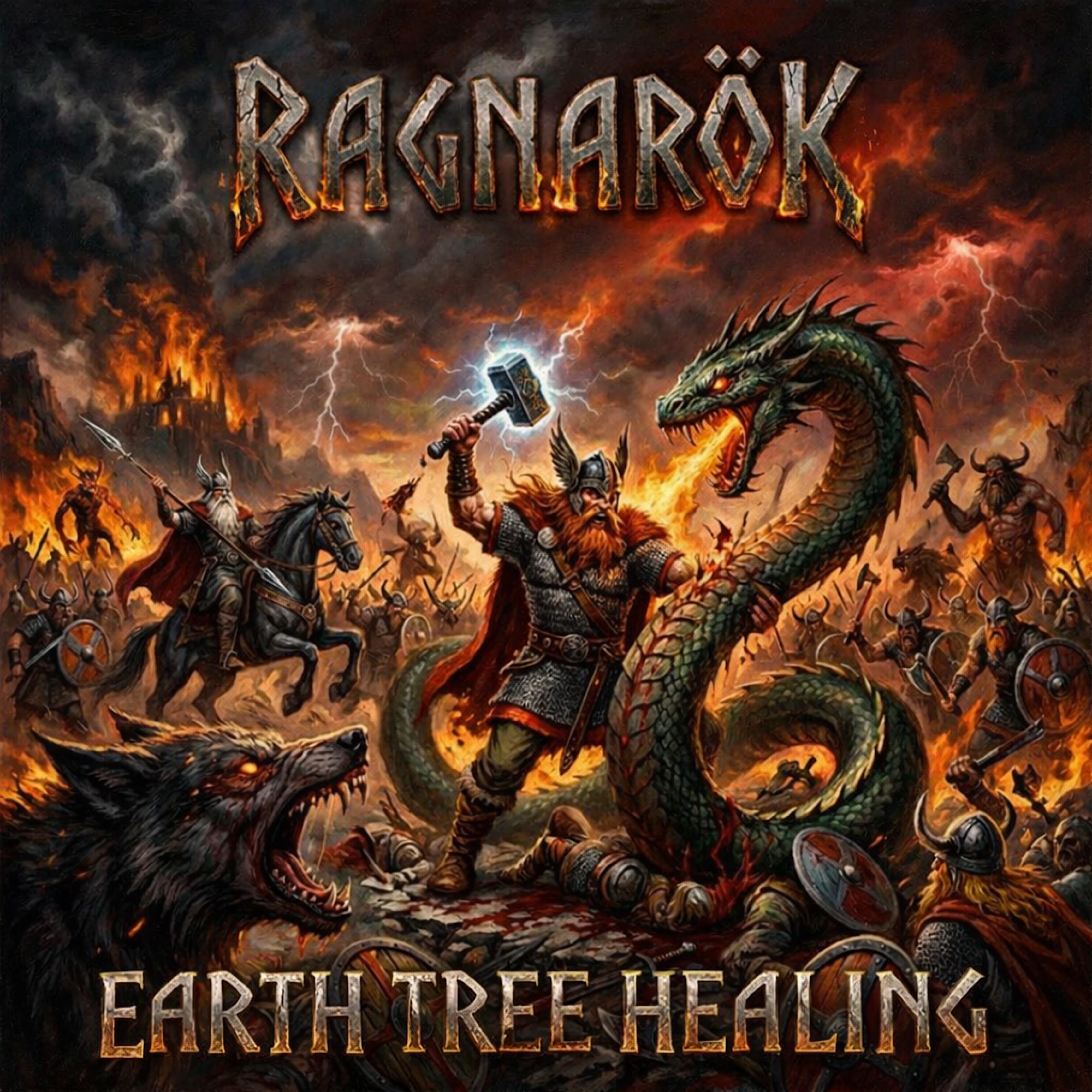
Ragnarok (Single)

 OUT NOW 

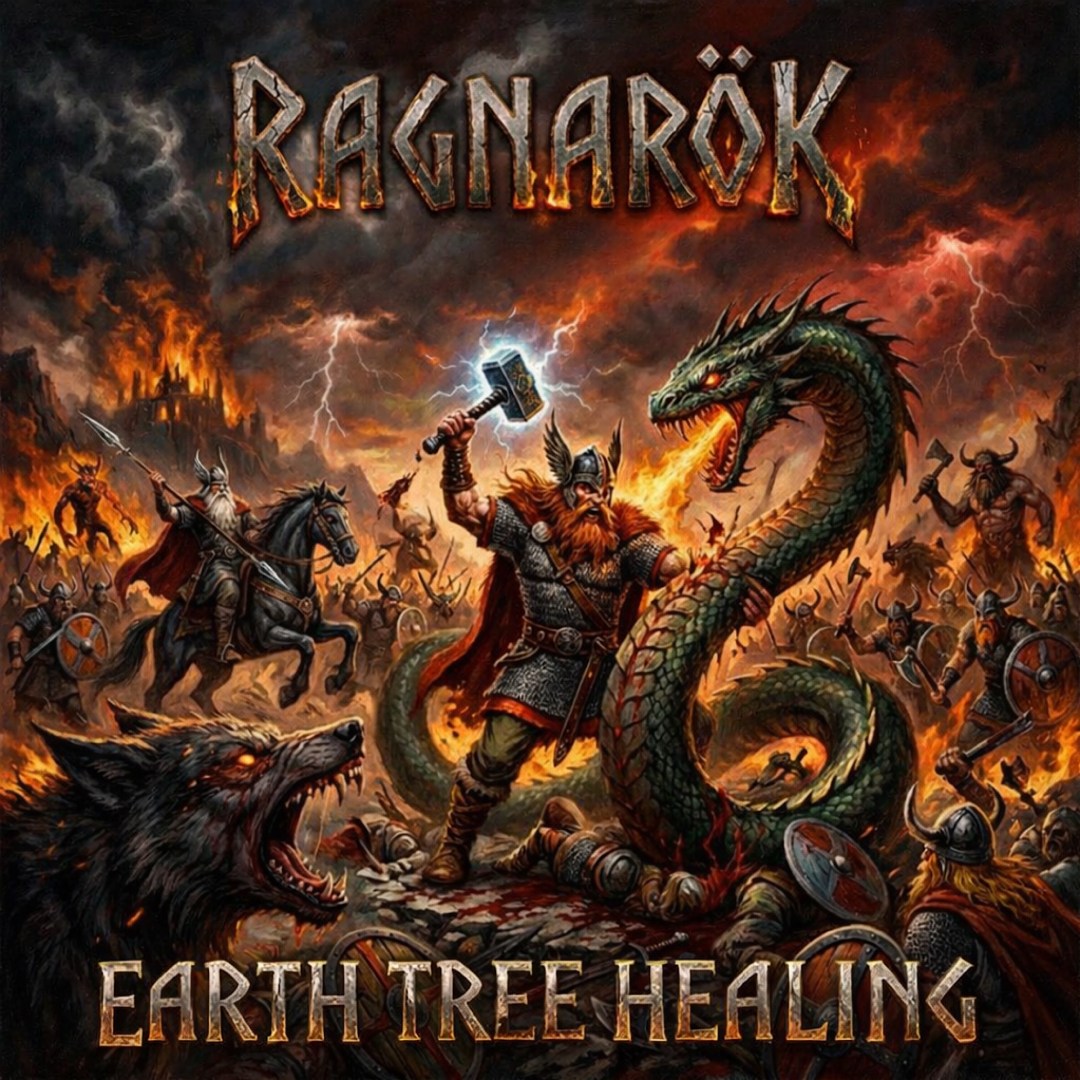
Single – Ragnarok by Earth Tree Healing has officially landed on all digital stores today.

This track is pure force — epic, powerful, and charged with primal energy.

Feel the rise, the battle, the transformation.

Turn it up. Let it move through you.

Album released 30th April 2026.

Music Links https://linktr.ee/earthtreehealing

Ragnarök: The End That Begins Everything

There is something strangely compelling about the idea that the world must end before it can be reborn. In Norse mythology, this idea finds its most powerful expression in Ragnarök—a cataclysm not just of destruction, but of transformation.

Ragnarök is often described as the “Twilight of the Gods,” but that phrase barely captures its scale. This is not a single battle or a moment in time. It is a chain reaction: the unraveling of order, the breaking of sacred bonds, and the final confrontation between gods, giants, and monsters. The world trembles, quite literally, as earthquakes shatter the land and the great wolf Fenrir breaks free from his chains. The serpent Jörmungandr rises from the sea, poisoning the skies. Even the sun and moon are devoured, plunging existence into darkness.

But what makes Ragnarök so fascinating is not just its chaos—it’s its inevitability. Unlike many mythologies where heroes can avert doom, the Norse gods know what is coming, and they face it anyway. Odin seeks knowledge to delay the end, Thor fights knowing he will fall, and countless others step into battle with full awareness of their fate. There is a quiet, powerful dignity in that acceptance.

And yet, Ragnarök is not purely an ending.

After the fires fade and the waters recede, something unexpected happens: the world returns. Green shoots emerge from scorched earth. A new generation of gods rises. Two human survivors, Líf and Lífthrasir, repopulate the world. Life continues—not as it was, but as something renewed.

This duality is what makes Ragnarök timeless. It speaks to cycles we see everywhere: in nature, in history, and even in our personal lives. Things fall apart. Structures collapse. Certainties vanish. But from that destruction comes space—space for rebuilding, reimagining, and beginning again.

Perhaps that’s why Ragnarök still resonates today. It mirrors our deepest fears—the loss of stability, the collapse of the familiar—but also our quiet hope that even after everything burns, something meaningful can grow from the ashes.

In the end, Ragnarök is not just a story about how the world ends.

It is a story about why endings matter.
Loki: The Trickster God Who Shaped the Norse Cosmos

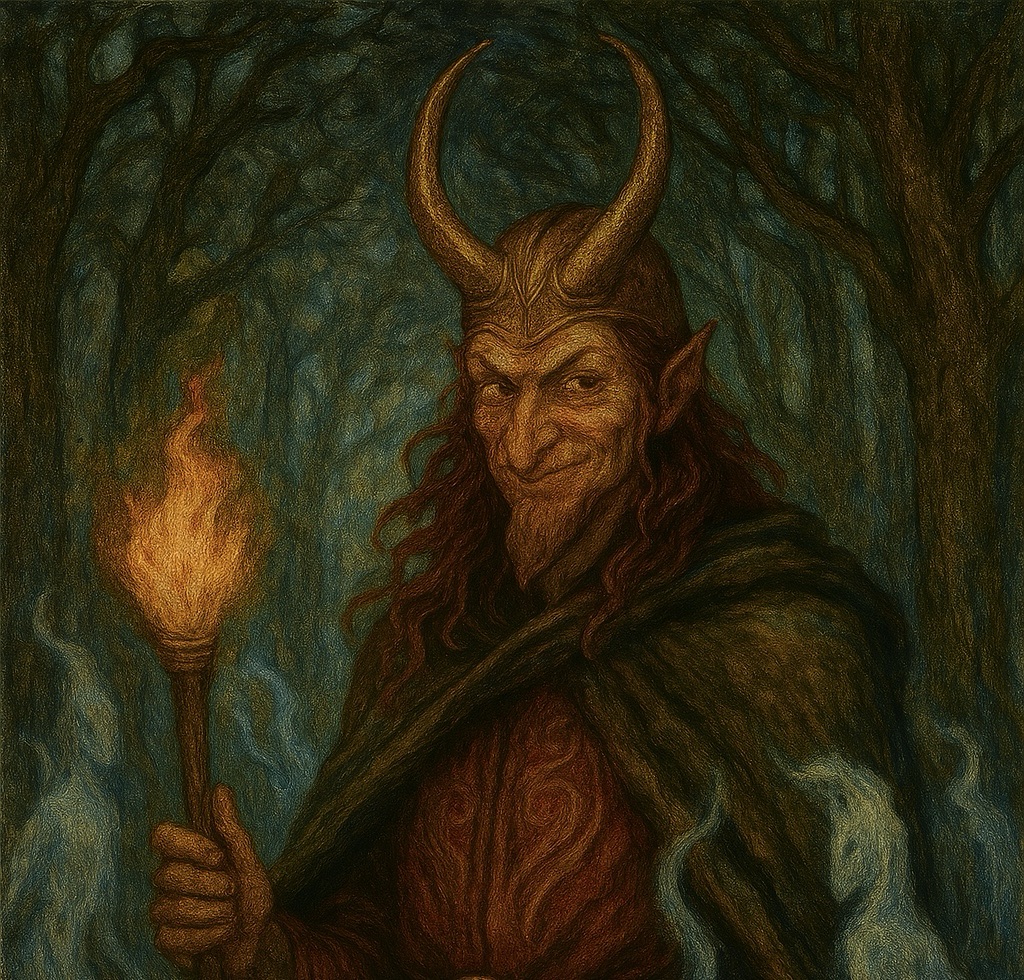
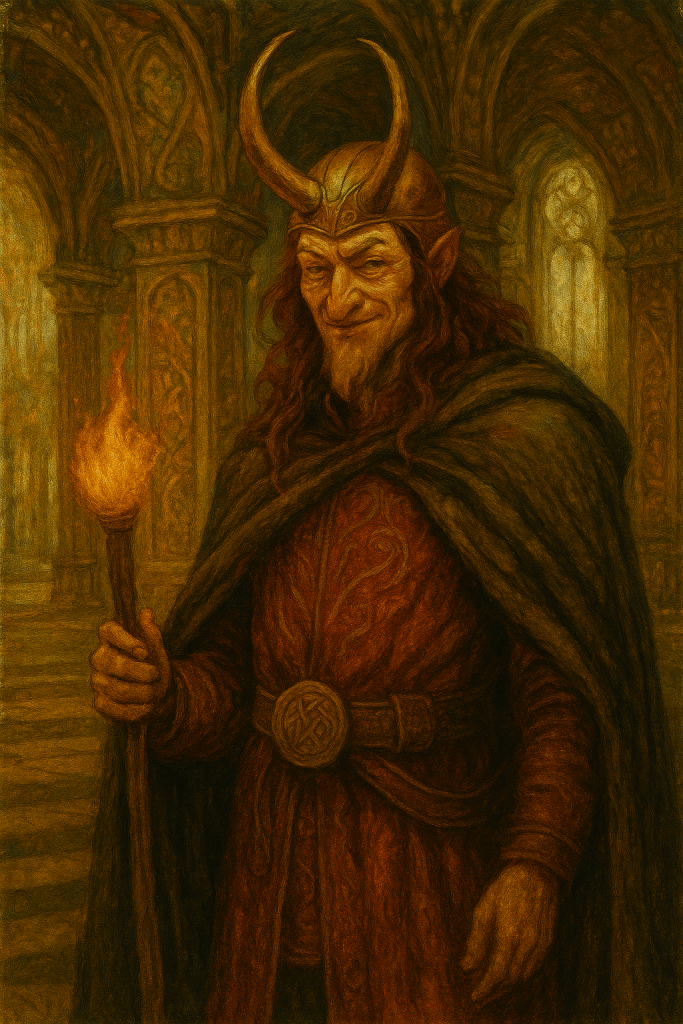
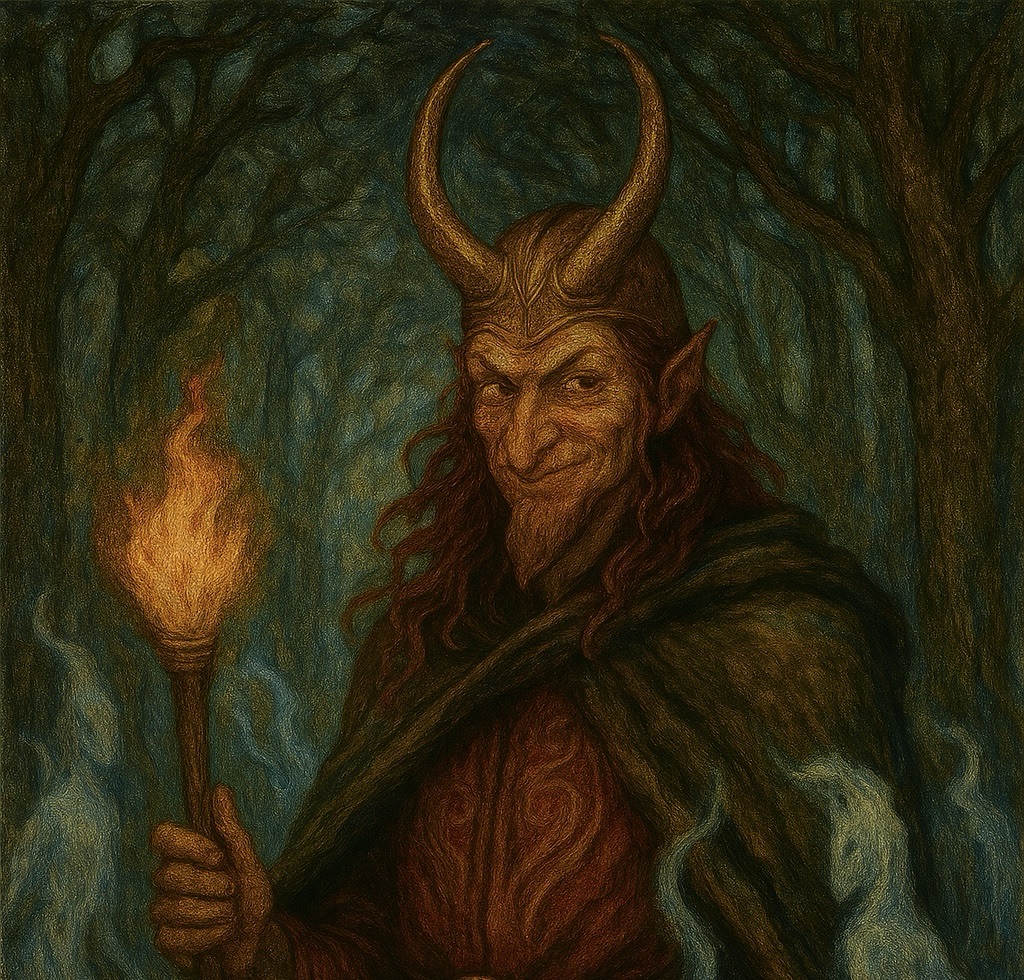
When we think of Norse mythology, names like Odin, Thor, and Freyja often come to mind—gods of wisdom, thunder, and love. But lurking in the shadows of Asgard is a figure far more complex, chaotic, and captivating: Loki, the trickster god. Neither wholly good nor entirely evil, Loki is the wildcard of the Norse pantheon—a shapeshifter, a schemer, and a catalyst for both disaster and transformation.

The track Loki by Earth Tree Healing, released in 2026, is a musical tribute to the Norse trickster god. 

Watch the video: 

The album is being composed and recorded autumn/winter/spring 2025/2026. 


Earth Tree Healing is known for ambient and spiritually inspired compositions, so it’s likely that Loki blends atmospheric textures with mystical undertones. Expect a soundscape that evokes transformation, unpredictability, and perhaps a touch of chaos—hallmarks of Loki’s mythic energy.

Music links for all discography:

https://linktr.ee/earthtreehealing

The Origins of Mischief

Loki’s lineage is as tangled as his schemes. Born to the jötunn (giant) Fárbauti and the mysterious Laufey, Loki is technically a giant himself, yet he lives among the Æsir gods in Asgard. His charm, wit, and cunning earned him a place at Odin’s side, but his loyalty was always questionable. Loki is a master of shapeshifting—he’s been a salmon, a mare (yes, he once gave birth to an eight-legged horse), and even an old woman. His identity is fluid, his motives elusive.

Chaos with a Purpose

Loki’s role in Norse mythology is paradoxical. He’s the one who causes problems—and the one who solves them. He cuts off Sif’s golden hair, only to commission the dwarves to forge her a new, magical replacement (along with Mjölnir, Thor’s hammer). He orchestrates the theft of Freyja’s necklace, then retrieves it through trickery. Loki is the god of disruption, but his chaos often leads to creation.

This duality makes Loki more than just a villain. He embodies the unpredictable forces of change, the necessary upheaval that precedes growth. In a world governed by fate (or wyrd), Loki is the agent of the unexpected.

The Road to Ragnarök

Despite his contributions, Loki’s mischief eventually turns malevolent. His most infamous act is orchestrating the death of Baldr, the beloved god of light. For this, he is bound in a cave with a serpent dripping venom onto his face—a punishment that will last until Ragnarök, the end of the world.

At Ragnarök, Loki breaks free and fights against the gods, leading the giants in a final, apocalyptic battle. He faces Heimdall, the watchman of the gods, and the two slay each other. In death, as in life, Loki is both destroyer and destroyed.

Loki Today: From Myth to Meme

Loki’s legacy has endured for centuries, evolving from ancient sagas to modern pop culture. He’s been reimagined in comics, films, and literature—notably as the charismatic antihero portrayed by Tom Hiddleston in the Marvel Cinematic Universe. But even stripped of Hollywood glamour, the mythological Loki remains a compelling figure: a reminder that the line between hero and villain is often blurred, and that chaos, while frightening, can also be a force of renewal.

Loki isn’t just a god of mischief—he’s a mirror reflecting the complexities of human nature. In his laughter, we hear the echoes of our own contradictions. And in his fall, we glimpse the cost of unchecked cunning. He may be bound beneath the earth, but Loki’s spirit lives on—in every twist of fate, every clever trick, and every story that refuses to follow the rules.