
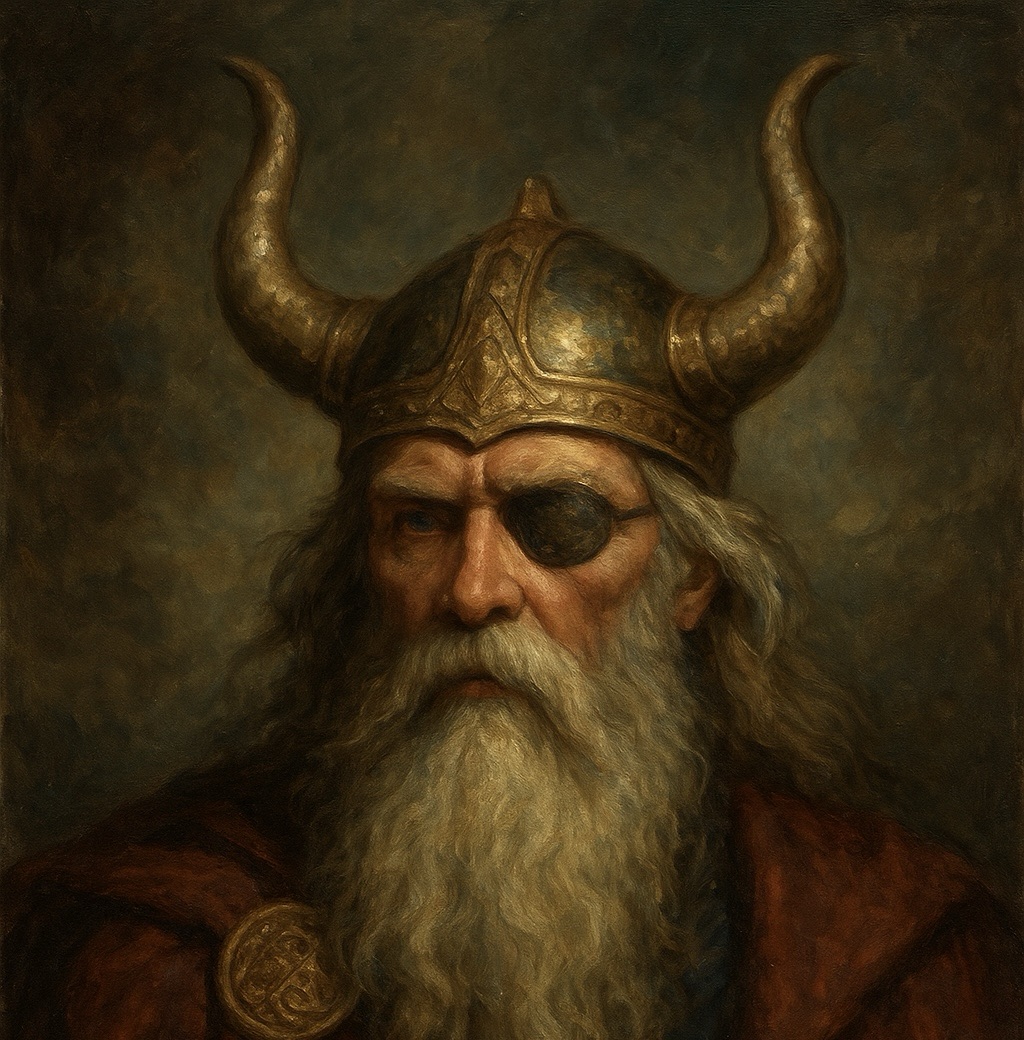
In the windswept halls of Norse myth, Odin stands not as a static god of thunder or harvest, but as a living paradox—warrior and poet, seeker and sovereign, father and forsaker. He is the Allfather, yes, but also the Wanderer, cloaked in mystery and driven by an insatiable hunger for wisdom.
Majestic, fierce, and transcendent. A rhythmical, powerful instrumental track about Odin would channel the ancient might and mysticism of the All-Father — ruler of Asgard, seeker of wisdom, and god of war and poetry.
I composed and recorded Odin on Sunday. ( 12th October 2025)
Autumn carries a kind of quiet, cinematic beauty — a season of transformation that mirrors the creative spirit. The air turns crisp, scented with woodsmoke and fallen leaves. Trees burn gold, amber, and crimson against skies that deepen earlier each day. As dusk settles faster, the world grows still — a gentle darkness that invites reflection rather than fear.
In those long, dark nights and often grey days in the UK, making music feels almost sacred. The hum of a guitar, the warmth of piano keys, or the slow pulse of a synth becomes a dialogue with the quiet outside. Every note seems to glow brighter against the darkness, every rhythm echoing the steady fall of rain or the whisper of wind through bare branches.
There’s magic in the solitude — in candlelight flickering across a desk, in breath misting by an open window, in the hush that allows creativity to bloom. Autumn and night together create a kind of cocoon — where emotions deepen, inspiration stirs, and music becomes a way to hold onto fleeting light.
Watch the full YouTube video.
The Seeker of Secrets
Odin’s story begins not with conquest, but with sacrifice. To gain the knowledge of the runes, he hung himself from Yggdrasil, the World Tree, pierced by his own spear, Gungnir. For nine nights he dangled between life and death—not for power, but for insight. This act of self-sacrifice reveals Odin’s core: he is not omniscient by birthright, but by relentless pursuit.
Earth Tree Healing
Music Links and Discography
https://linktr.ee/earthtreehealing
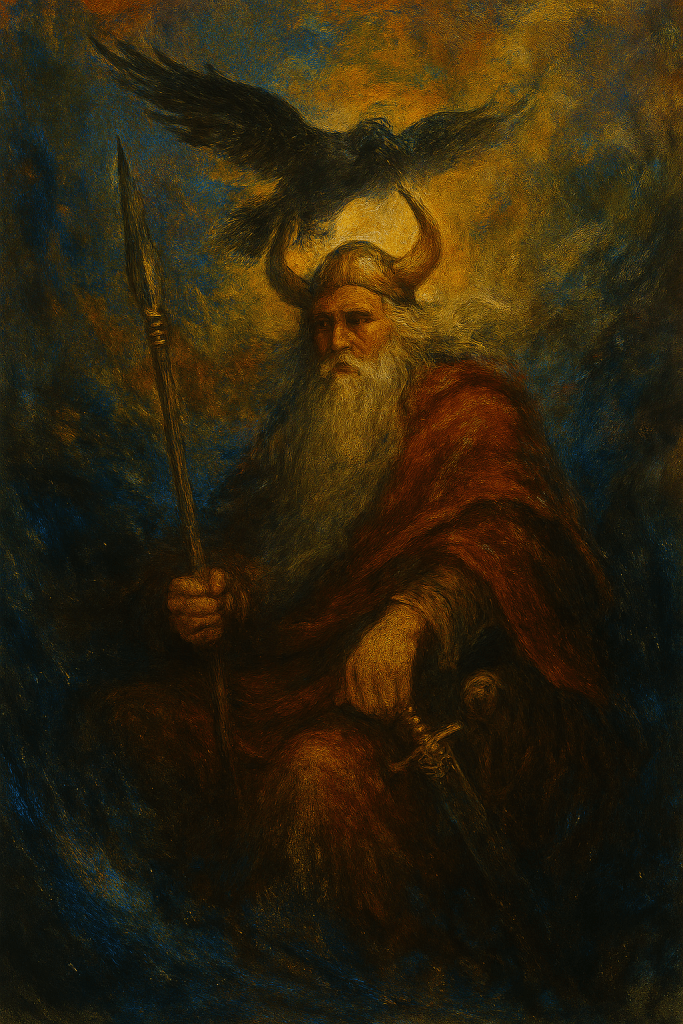
He drinks from Mimir’s well, trading an eye for a glimpse into cosmic truth. He sends his ravens, Huginn (Thought) and Muninn (Memory), across the Nine Realms each day, gathering whispers of the world B. Odin’s wisdom is not passive—it is active, costly, and ever-evolving.
The Warrior of Chaos
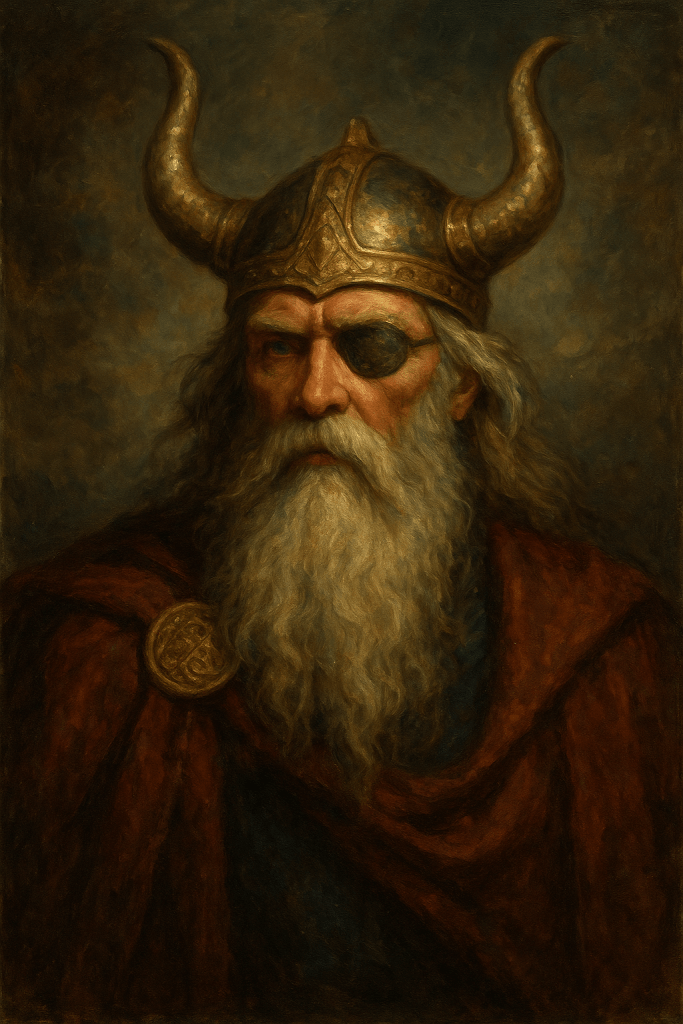
Though he seeks knowledge, Odin is no stranger to war. He chooses the slain for Valhalla, preparing them for Ragnarök—the twilight of the gods. His wolves, Geri and Freki, flank him in battle, and his eight-legged steed Sleipnir carries him between worlds B. Yet Odin rarely fights directly. He manipulates, inspires, and deceives. He is the god of strategy, not brute force.
The Valknut, a symbol of three interlocked triangles, often marks the fallen chosen by Odin. It speaks to his dominion over life, death, and the liminal space between.
The Keeper of Contradictions
Odin is a god of poetry and sorcery, of kingship and madness. His name—derived from Óðr, meaning “fury” or “ecstasy”—captures this duality A. He inspires skalds with the Mead of Poetry, yet he also stirs berserkers into frenzied battle. He is both the whisper in the poet’s ear and the scream on the battlefield.
This complexity makes Odin deeply human. He is flawed, curious, manipulative, and mournful. He fathers gods like Thor and Baldr, yet often walks alone, disguised as a beggar, testing mortals and gods alike.
Why Odin Still Matters
In a world obsessed with certainty, Odin reminds us that wisdom is born from discomfort. That leadership requires sacrifice. That truth is rarely simple. He is the god of those who ask questions that have no easy answers.
To honor Odin is to embrace complexity—to seek, to wander, to remember, and to forget. He is not a god of arrival, but of journey.
 Earth Tree Healing