
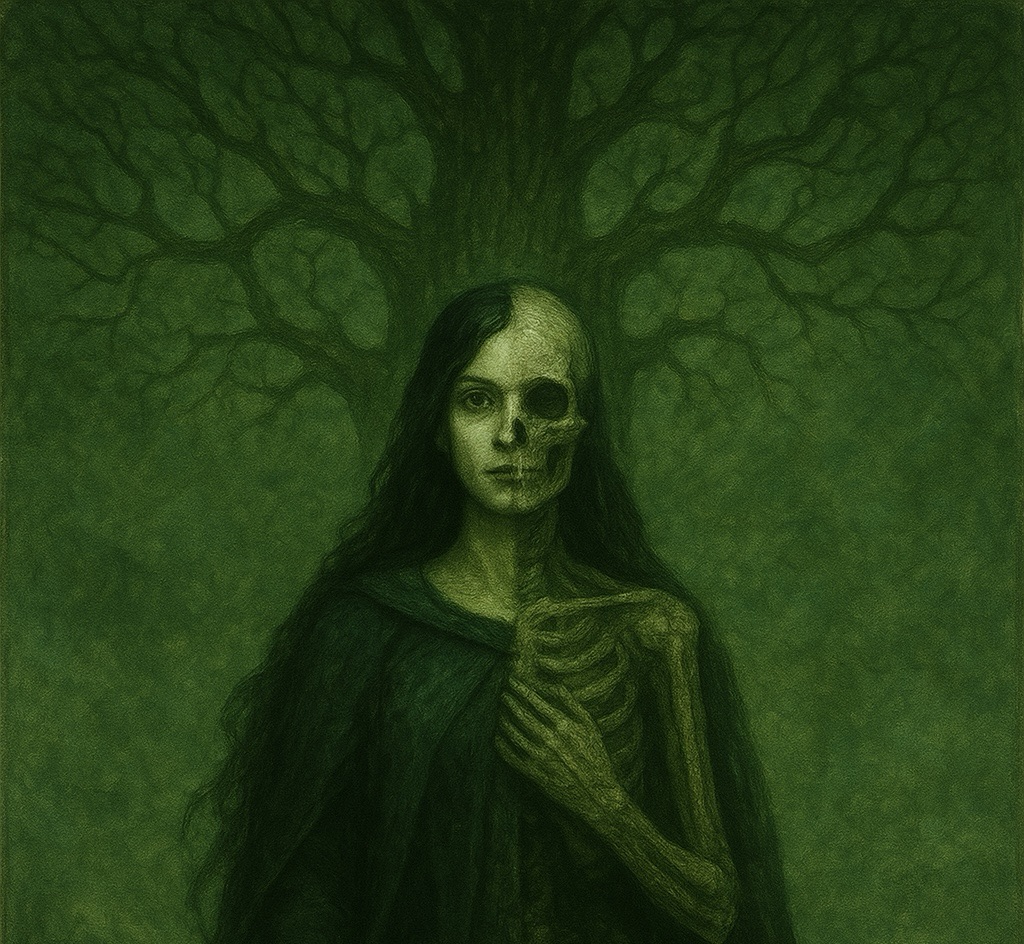
In the shadowed corners of Norse mythology, where frost bites and silence reigns, dwells Hel—the goddess of the dead. Often overlooked in favor of her thunderous uncle Thor or her infamous father Loki, Hel presides over a realm that is neither heaven nor hell, but something far more ancient and ambiguous: the land of the forgotten dead.
Track Hel by Earth Tree Healing: like wind curling through the roots of Yggdrasil. Sparse chimes echo in the distance, evoking the frost-laced silence of the underworld. A slow, pulsing rhythm emerges, mimicking the heartbeat of forgotten souls, steady and solemn.
Layered beneath are ethereal vocal textures—half-whispers, half-sighs—that drift like spirits through mist. The melody is hauntingly beautiful, built on minor scales and modal shifts that suggest both sorrow and serenity. Strings swell and recede like waves of memory, while deep synth pads anchor the listener in Hel’s realm: cold, still, and strangely comforting.
Born of Mischief, Bound to the Dead
Hel is the daughter of Loki, the trickster god, and the jötunn Angrboda, a giantess of chaos. Her siblings are no less fearsome: Fenrir, the monstrous wolf, and Jörmungandr, the world-serpent. While her brothers embody destruction, Hel is a quieter force—her power lies in stillness, inevitability, and the finality of death.
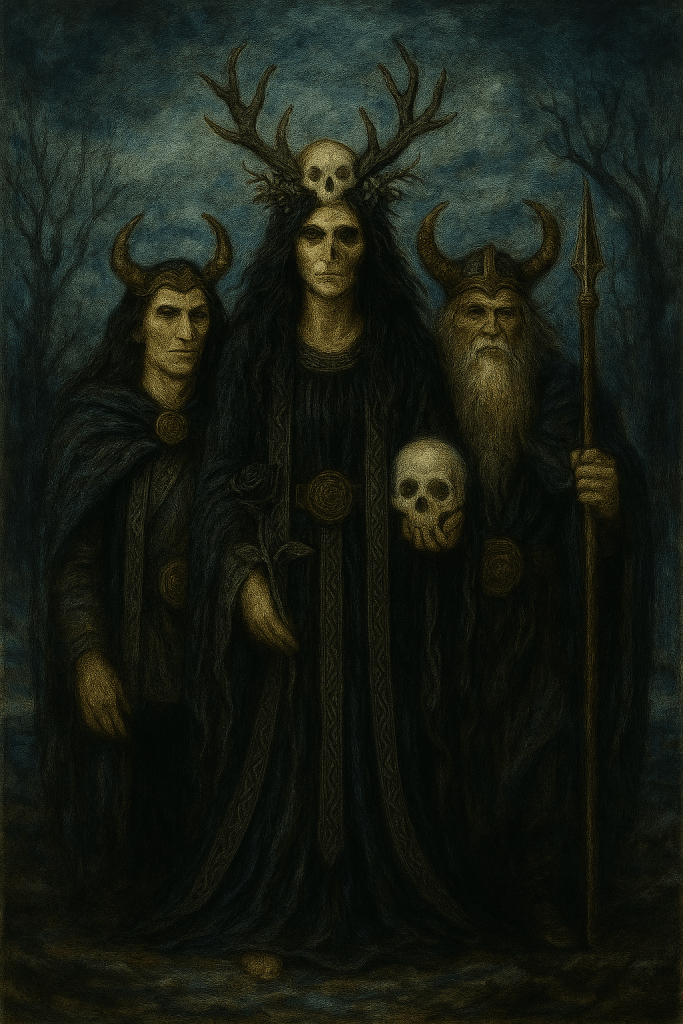
Odin, fearing the potential of Loki’s children, cast Hel into the underworld and gave her dominion over those who die of sickness or old age—those who do not fall gloriously in battle and thus cannot enter Valhalla. Her realm, also called Hel, is a cold, misty place beneath the roots of Yggdrasil, the world tree. It is not a place of torment, but of rest and silence.
The Half-Living Queen
Hel’s appearance is as striking as her domain. She is said to be half alive and half dead—one side of her body vibrant and beautiful, the other decayed and corpse-like. This duality reflects her nature: she is both a goddess and a grave, a caretaker and a captor. She does not seek worship or war. She simply waits.
Unlike other death deities who revel in judgment or punishment, Hel is passive. She does not chase souls; she receives them. Her power is not in violence, but in inevitability. In a mythology obsessed with glory and battle, Hel reminds us of the quiet deaths—the ones history forgets.
Hel in the Myths
Hel’s most notable myth involves the death of Baldr, the beloved god of light. After Baldr is killed, the gods plead with Hel to release him. She agrees—on one condition: if every creature in the world weeps for Baldr, he may return. All do, except one—Loki in disguise. Thus, Baldr remains in Hel’s realm until Ragnarök, the end of the world.
This story reveals Hel’s fairness and her firm grip on fate. She does not bend to emotion or divine pressure. Her realm is governed by rules older than the gods themselves.
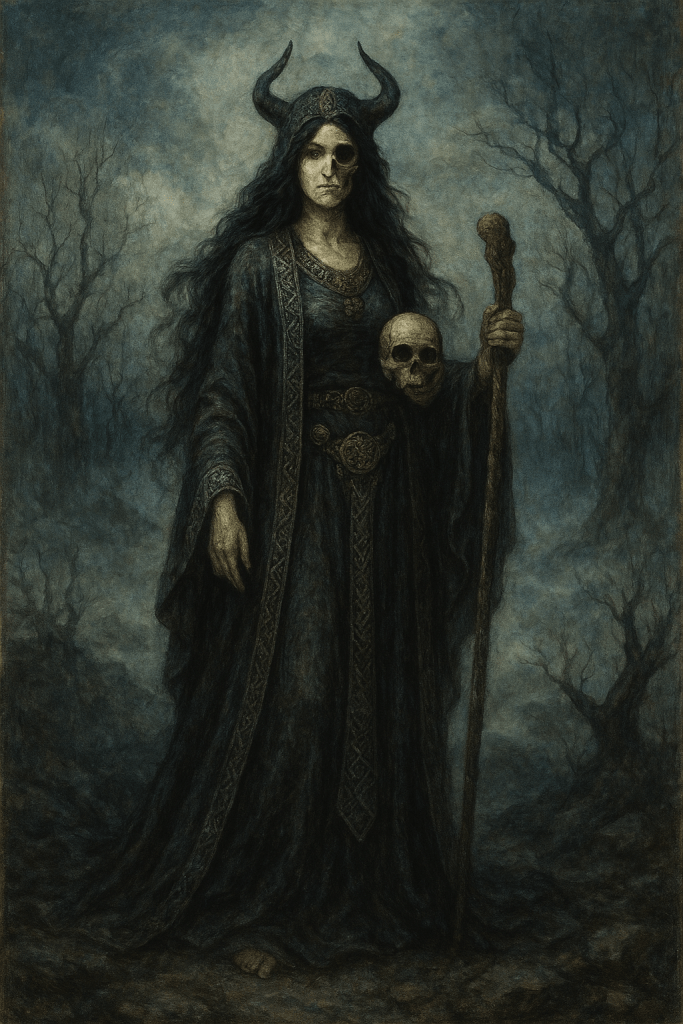
The Legacy of Hel
In modern times, Hel has often been conflated with the Christian concept of Hell, but they are not the same. Hel’s domain is not a place of punishment—it is a resting place for those who die quietly. She is not evil, but inevitable. Her name survives in language, her essence in archetype.
Hel is the goddess of endings, of the uncelebrated dead, of the quiet truths we fear to face. She is the keeper of memory, the guardian of shadows, and the sovereign of the still.
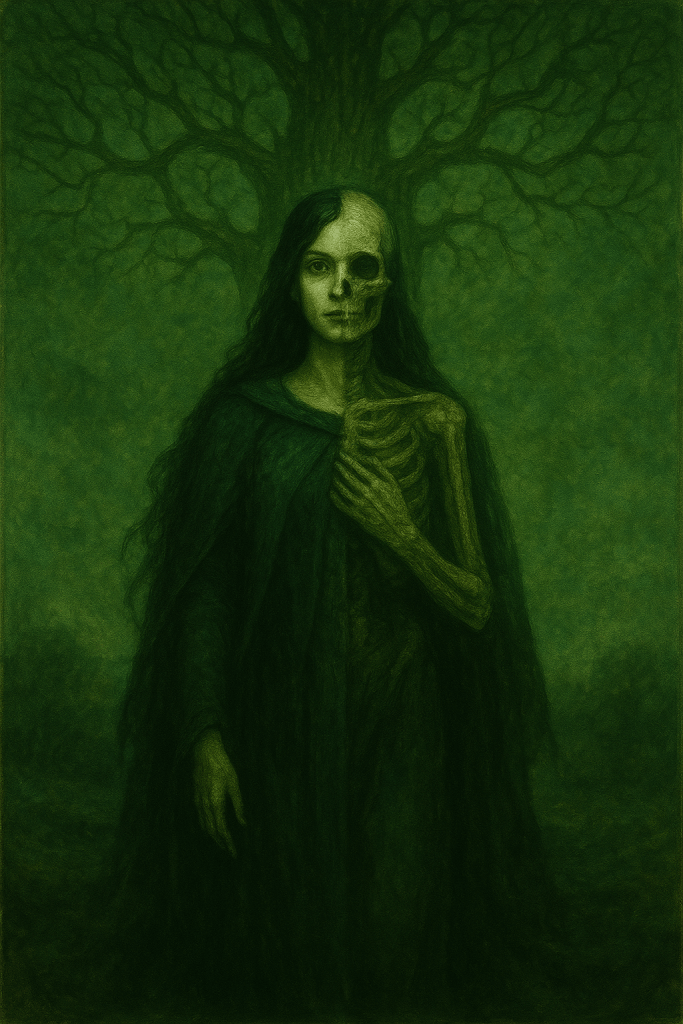
Hel may not ride chariots or wield hammers, but her presence is felt in every breath that ends, every story that fades, and every silence that follows the storm. She is the goddess who waits—not with malice, but with patience. And in her waiting, she holds the world’s forgotten souls.
 Earth Tree Healing